
AI for Recruiting & Resume Screening, Responsibly
AI in recruiting speeds up resume screening without turning into bias. See what to delegate, what to keep human, and how to stay compliant.
SquadOS Team · June 3, 2026 · 5 min read
Recruiting is where HR drowns in volume the most. A good role attracts hundreds of resumes, almost all in different formats, with information missing, in the middle of twenty other open roles. The recruiter spends hours reading PDFs to build a shortlist that could have come together in minutes.
AI helps a lot here, as long as you know what to delegate and what to keep in your hands. Used well, it frees the recruiter to talk to people. Used badly, it automates bias and puts you at legal risk. This guide shows the line between the two.
What AI does well in recruiting (and what it doesn’t)

AI is good at high-volume, repeated, text-based work. That is exactly the top of the hiring funnel. It reads fast, compares against criteria, and organizes, without getting tired at resume number 200.
What it does well:
- Reads and structures resumes that arrive in a thousand formats, pulling out experience, skills, and education.
- Compares against the role requirements and ranks candidates by fit.
- Answers candidate questions about the role, the process, and the status, instantly.
- Summarizes a long resume into a few points so the recruiter decides faster.
What it should not do on its own:
- Decide who advances and who gets cut. That is judgment, and judgment needs a human.
- Assess “culture fit” by itself. That is where bias sneaks in disguised as a criterion.
- Infer protected characteristics (age, gender, origin) from a resume. Not even as a signal.
The rule is simple: AI screens and suggests, the person decides. When that flips, you did not gain efficiency, you created a problem.
Resume screening without becoming a bias machine
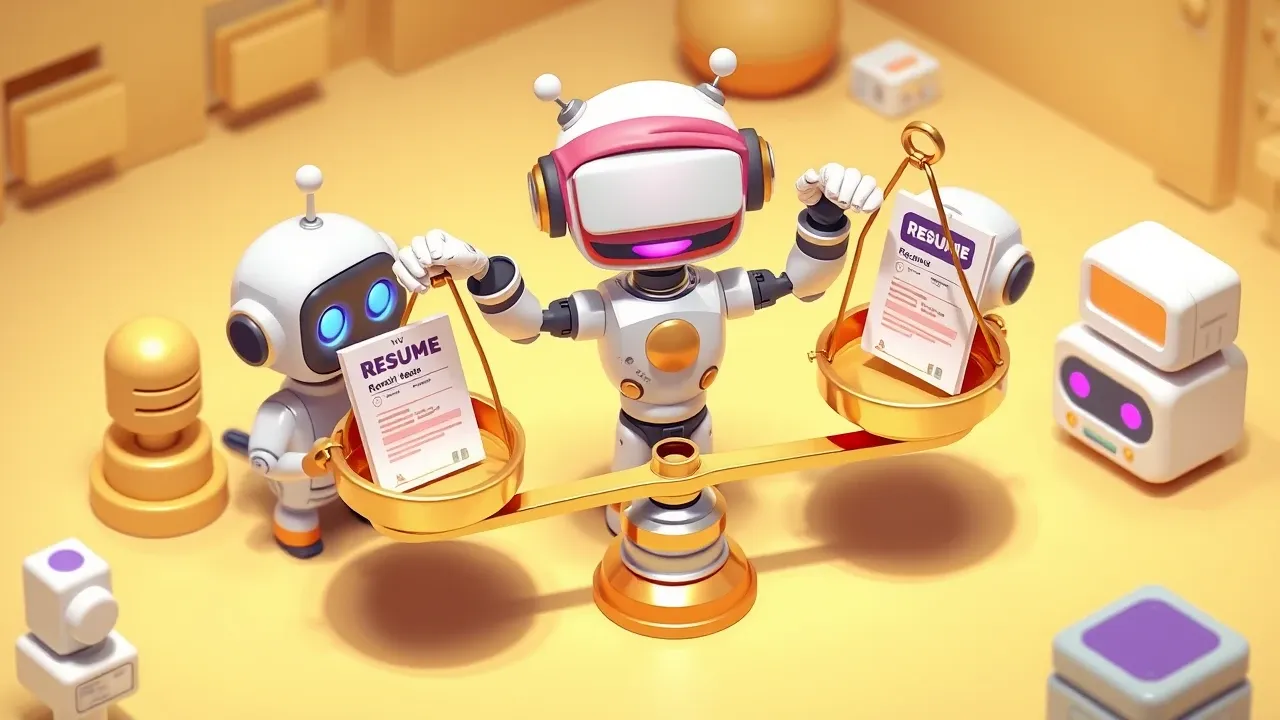
Screening is the most obvious use and the riskiest. A model trained on past decisions learns past patterns, including the bad ones. If the company’s history always hired the same profile, AI tends to repeat that, and even give it a veneer of objectivity.
You can do AI screening responsibly. Three practices hold most of the risk:
- Explicit criteria, defined by you. Say what matters for the role (skills, specific experience, real requirements) instead of asking for a generic “best candidate.” Vague criteria are where bias lives.
- Transparent scoring, not a magic number. You need to see why one candidate landed on top and another at the bottom. If AI cannot explain it, you cannot audit or correct it.
- Human review of the whole list, not just the top. Look at who the filter rejected, not only who it approved. That is where systematic errors show up.
AI screening exists to give you a prioritized list and the reason behind each position. Not to hand you a closed “yes or no” that nobody reviews.
Where else AI speeds up the hiring funnel

Screening is just the start. The recruiting funnel has several repetitive points AI handles without touching the merit decision:
- Interview scheduling. The agent talks to the candidate, offers open slots, and books, without the ten-email back and forth. The calendar bottleneck disappears.
- Candidate replies. Questions about the role, the stages, and the status answered instantly. Nobody is left in the void and the employer brand thanks you.
- Structured pre-interview. The agent collects objective information missing from the resume (availability, expectations, knockout requirements) before the human conversation.
- Status communication. Telling who advanced and who was not selected, with respect and on time. The part that vanishes first when the team is overloaded.
None of these tasks decide who gets hired. All of them save hours the recruiter gives back to the real interview, which is where hiring is won or lost.
Responsible hiring: privacy law, transparency, and the final human call
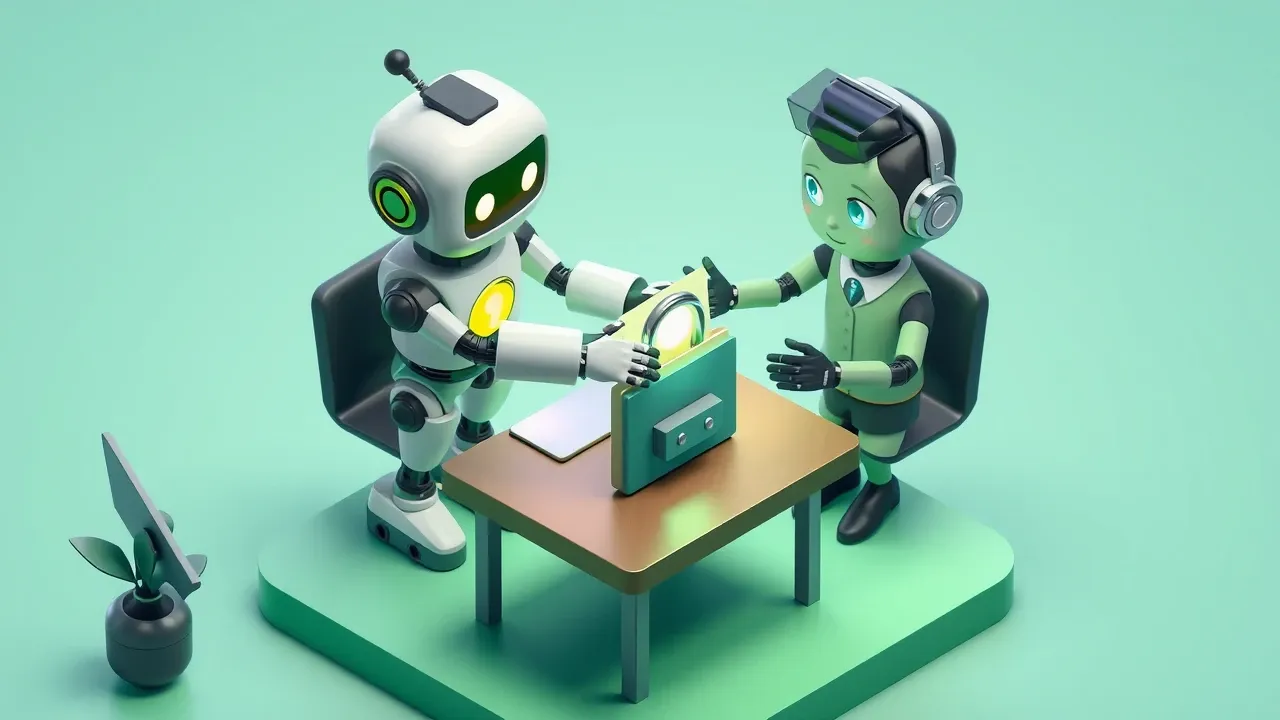
A resume is personal data, and a lot of it is sensitive. Using AI here does not waive privacy law (LGPD, GDPR), it raises the bar for it.
The basics to get right:
- Clear purpose and legal basis. You collect and process a resume to evaluate the application, nothing beyond that. Do not reuse the data for something else without consent.
- Transparency with the candidate. The person has the right to know AI takes part in screening. Hiding it erodes trust and exposes you.
- Retention and deletion. Define how long you keep the resumes of people you did not hire, and delete on time. An eternal resume database is a liability, not an asset.
- A recorded human decision. Hiring is decided by a person, and it is logged who decided based on what. That protects the candidate and protects the company.
The technology changes, the principle does not: AI speeds up the process, the responsibility stays with people.
Want to screen faster without giving up control? With SquadOS you build a recruiting agent by chatting: describe the role’s criteria in AgentMaker, upload the resumes as a base, and the agent ranks by fit with transparent scoring, sensitive-data guardrails on, and every step logged. The list arrives ready. The decision stays yours.